
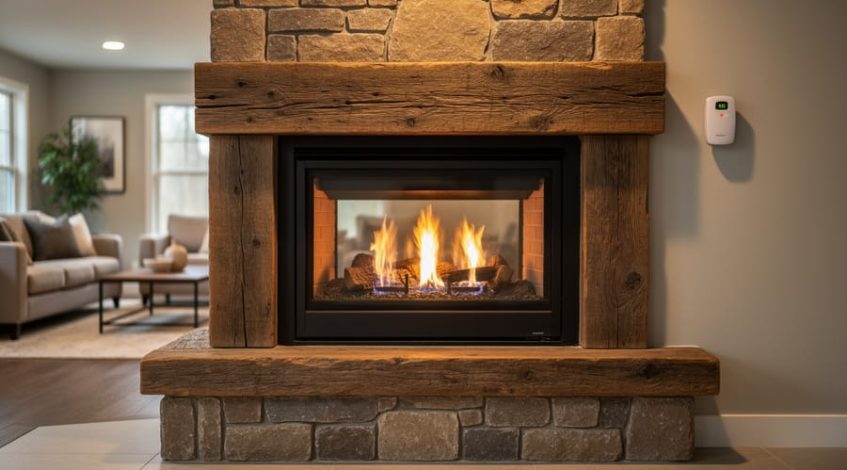
A safe gas fireplace comes down to three things: a listed appliance, a qualified installer, and working carbon monoxide detection. Get those right and you’ve handled most of what keeps a gas hearth from becoming a hazard. Get them wrong and you’re gambling with an invisible threat.
That threat is carbon monoxide, an odorless, colorless gas created when fuels burn incompletely. You can’t smell it or see it, which is why alarms and detection matter as much as the fireplace itself. The International Building Code and International Fire Code (Section 915) spell out the requirements for CO alarms and detection, and any home with a fuel-burning appliance falls squarely in that conversation.
Rules vary by place. Georgia, for example, sets state minimum fire safety standards that apply statewide without a municipality needing to adopt them, yet local governments can enforce them on most buildings except one- and two-family dwellings. So your local authority, not a blog post, has the final word on your project.
What the standards do agree on is clear. Installation and service belong to a qualified installer, a service agency, or your gas supplier. Clearances follow local codes and the gas supplier’s requirements. Decorative appliances going into an approved solid fuel-burning fireplace must be listed to ANSI Z21.60/CSA 2.26.
Venting is where details differ most, so confirm them with your manufacturer and local officials before you build anything.
If you love shaping a hearth from reclaimed timber or salvaged stone, this is the groundwork that lets your craftsmanship shine safely.
Why a Safety Gas Fireplace Starts With the Rules, Not the Mantel
Every great hearth starts with a story, and the best ones end with a family gathered safely around the glow. A gas fireplace brings together three things that deserve respect: fuel, open flame, and the enclosed air of a living space. That combination is exactly why safety rules exist. They aren’t there to slow you down. They protect the people who will sit beside your work for years.
Think of those requirements as design inputs, the same way wood grain or a tricky joint shapes what you build. When you know the rules early, you plan smarter. You choose materials with confidence, leave room for access, and avoid rebuilding something you’ve already finished. Reading up on fireplace hearth codes before you pick up a saw is one of the easiest ways to keep a project both beautiful and legal.
For hobbyists and pros who build mantels and surrounds, this matters because your craftsmanship meets regulated territory the moment it sits near a gas appliance. Knowing where that line falls lets you build with pride, and with peace of mind.
Gas Fireplace Safety Regulations: Who Sets the Rules
Reading the Georgia Example Without Getting Lost
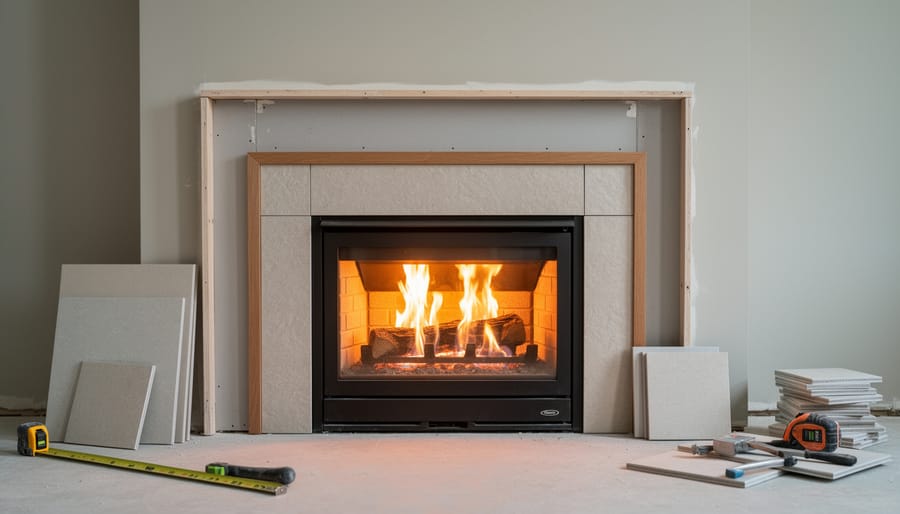
Georgia’s approach is a handy example because it spells out the layers. The state sets what it calls minimum fire safety standards under O.C.G.A. § 25-2-4. “Minimum” simply means the lowest acceptable bar, the floor you can’t go beneath, not the ideal. Those rules carry statewide application without local adoption, so a city or county doesn’t have to vote them in.
Enforcement is where it gets interesting. Local governments can enforce the standards on most buildings, but one- and two-family dwellings, plus certain row houses and townhouses separated by a 2-hour fire wall, are carved out of that authority.
Limited enforcement doesn’t mean limited risk. A flame in a closed living space behaves the same whether or not an inspector visits. That’s why it’s smart to treat the minimums as a starting point and follow best practices anyway.
Carbon Monoxide: The Invisible Risk Behind Every Gas Appliance
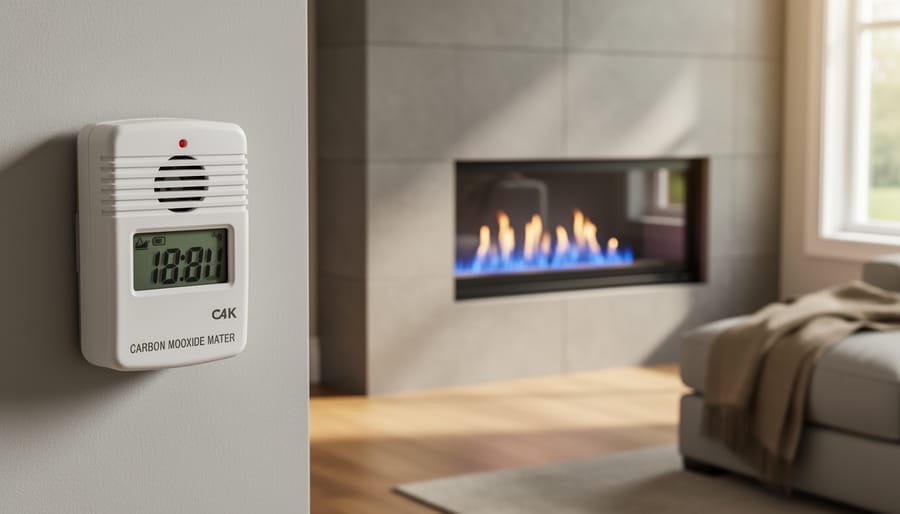
You can’t smell it, see it, or taste it, and that’s exactly what makes carbon monoxide so serious. It’s a gas that’s created by incomplete combustion, which happens when a fuel doesn’t burn fully. A gas fireplace is one more appliance that burns fuel inside your living space, so it belongs on your radar from the very start of a build.
Because the gas gives no warning on its own, detection has to do the noticing for you. Building rules reflect this: CO alarms and CO detection are to be provided in accordance with IBC/IFC Section 915. Here’s a quick glossary to make that language friendlier:
- Carbon monoxide
- An odorless, colorless gas produced when fuels burn incompletely.
- Incomplete combustion
- Burning that doesn’t fully consume the fuel, leaving carbon monoxide behind as a byproduct.
- CO alarm
- A device that senses carbon monoxide and sounds a warning so occupants can react.
- IBC
- The International Building Code, a model set of rules for how buildings are constructed.
- IFC
- The International Fire Code, a companion set of rules focused on fire safety in buildings.
Since the rules call for CO detection, think about it the way you’d think about lighting or outlets: as part of the room’s layout. Where an alarm goes, and how it sits against your mantel and surround, is easier to plan before the final finish goes on. Check the manufacturer’s instructions and your local requirements for placement, and ask your qualified installer to weigh in.
Installation Standards: Why a Qualified Pro Matters
Where the Maker’s Work Ends and the Installer’s Begins
Think of it as a relay race. You carry the baton through design, materials, and finish, then hand it to a pro at exactly the right moment.
Your side of the line is the creative work: sketching the mantel, choosing reclaimed oak or salvaged barn beams, cutting joinery, and sanding and sealing until the grain glows. That’s where your skill shines, and nobody can do it quite like you.
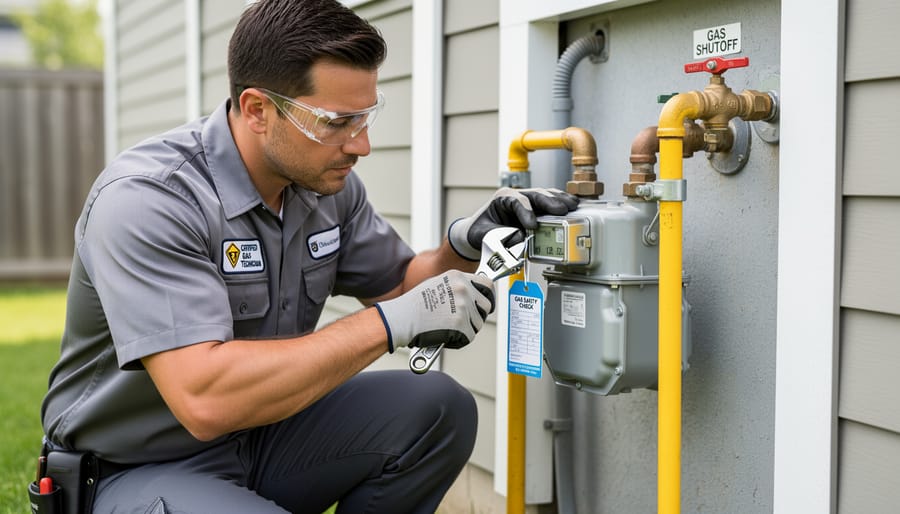
The installer’s side is everything involving gas. Installation and service must be performed by a qualified installer, service agency, or the gas supplier. Clearances also need to follow local installation codes and the gas supplier’s requirements, so ask for those details before you cut a single board.
Talk early, and often. When you and your installer plan together, your surround fits the unit, service access stays open, and the finished piece is as safe as it is beautiful.
Certified Appliances and Listings: What the Labels Tell You
A “listed” appliance has been evaluated and tested by a recognized testing organization against a published safety standard, then marked with a label saying so. That label is the manufacturer’s proof, in plain sight, that the unit has been checked against something other than the sales brochure.
Here’s the verified rule worth knowing: decorative appliances meant for installation in approved solid fuel-burning fireplaces must be listed under ANSI Z21.60/CSA 2.26. ANSI is the American National Standards Institute, CSA is the Canadian Standards Association, and Z21.60/CSA 2.26 is the specific standard behind that listing.
Why does it matter to a maker? A recognized standard gives you, your installer, and any inspector a common reference point. A unit without clear listing information leaves everyone guessing.
Make it a habit to look for the listing label on any unit you buy, and on any you inherit with a house. This matters most when you’re converting or repurposing an existing masonry fireplace, where you might be fitting a decorative appliance into an old firebox. Don’t assume a match. Check the label, read the manufacturer’s instructions, and ask a qualified installer before you start building the surround.
Designing a Surround That Respects Safety and Sustainability
There’s real joy in building a mantel from salvaged barn beams or reclaimed oak, wood that already has a story before you touch it. The trick is letting safety shape the design from the very first sketch. Code, clearances, and the manufacturer’s instructions aren’t suggestions to work around. They’re the borders of your canvas, and the best surrounds are drawn inside them.
Here’s a planning sequence that keeps a safety gas fireplace project on track:
- Check your local rules with the building department, since requirements vary by jurisdiction.
- Choose a listed appliance, and look for listing information on the unit itself.
- Ask your qualified installer about clearances and which materials are acceptable near the unit.
- Design the surround around those limits, not the other way around.
- Build the mantel and surround, leaving room for service access.
- Have the installer confirm everything before you apply final finishes.
Service access matters more than most makers expect. Installation and service must be handled by a qualified installer, service agency, or the gas supplier, so design panels or trim that can come off without wrecking your joinery. Follow the installer’s guidance on materials near the unit rather than guessing, and get your clearance numbers from the manufacturer and local code.
New to all this? Start with the planning stage, which needs no power tools at all. When you’re ready to build, a beginner workshop setup and a starter woodworking kit will carry you through. Few things beat finishing a salvaged-wood hearth you know is as safe as it is beautiful.
Common Questions About Gas Fireplace Safety
Do I need a pro to install a gas fireplace? Yes. Installation and service must be performed by a qualified installer, service agency, or the gas supplier. Build the surround yourself, but leave the gas work to them.
Do carbon monoxide alarms apply? CO alarms and CO detection are to be provided in accordance with the applicable requirements of IBC/IFC Section 915. Carbon monoxide is an odorless, colorless gas created when fuels burn incompletely, so you can’t rely on your senses to catch it. Treat alarm placement as part of the room’s design.
Where do I find the rules for my area? Start with your local building department, since requirements vary by location. In Georgia, for example, state minimum fire safety standards apply statewide, though local enforcement doesn’t extend to most one- and two-family dwellings. Ask what applies to your home specifically.
What about clearances and venting? Clearances must follow local installation codes and the gas supplier’s requirements. Venting details depend on your specific unit and location, so get them from the manufacturer’s instructions, your local building department, and your installer. For help planning woodworking safe clearances around the hearth, that guide is a good companion.
What does “listed” mean? A listed appliance has been certified to a recognized standard. For instance, decorative appliances intended for approved solid fuel-burning fireplaces must be listed under ANSI Z21.60/CSA 2.26. Look for that label before you buy or convert anything.
A hearth sits at the center of a handcrafted room, and the best ones earn that spot twice: once for how they look, and again for how safely they run. Build one without the other and the project isn’t finished.
Keep the essentials close as you plan. Find out which gas fireplace safety regulations apply where you live, since rules vary by location and your local building department can tell you what covers your home. Bring in a qualified installer for the gas work, and follow the manufacturer’s instructions and local code for clearances. Look for listed appliances, such as those meeting ANSI Z21.60/CSA 2.26 where it applies. And protect everyone under your roof with carbon monoxide detection, because that gas is odorless and colorless.
None of this has to dampen your enthusiasm. Treat each requirement as a design input, then pour your creativity into the mantel, the reclaimed wood, the finish. Plan it thoughtfully, build it well, and you’ll have a hearth that warms the room for years.