
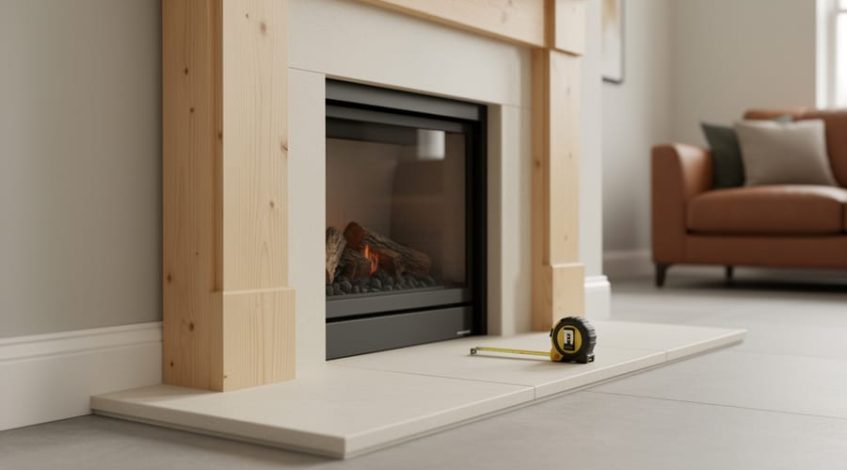
Planning a fireplace installation or custom surround? Fireplace hearth codes exist to prevent house fires by ensuring combustible materials stay safely away from heat sources. The 2024 International Residential Code (IRC) mandates specific hearth dimensions, extension measurements, and clearance requirements that vary based on your fireplace type, with gas fireplaces generally requiring less clearance than wood-burning units but still demanding strict compliance.
Here’s what matters for your project: the IRC requires a non-combustible hearth to extend at least 16 inches beyond the fireplace opening on all sides for most residential installations, though gas fireplace manufacturers often specify their own clearances (sometimes as little as 6 inches) that supersede code minimums when properly listed and tested. You’ll also need to account for vertical clearances to mantels and combustible trim, typically 6 to 12 inches depending on how far the mantel projects from the wall.
Understanding these requirements before you start building saves you from costly mistakes and potential safety hazards. Whether you’re framing a new fireplace surround, installing tile work, or designing a custom wooden mantel, knowing exactly where combustible materials can and cannot go lets you create beautiful, code-compliant work with confidence.
The good news? Once you grasp the logic behind hearth codes (keeping flame and radiant heat away from anything that burns), the measurements become straightforward. This guide breaks down the 2024 IRC requirements, explains manufacturer-specific clearances for gas fireplaces, and shows you how to apply these rules to real woodworking projects without sacrificing design or craftsmanship.
Why Fireplace Hearth Codes Matter for Your Woodworking Projects
Building codes aren’t red tape meant to frustrate your creative vision, they’re the invisible safety net that protects everything you’ve worked to create. When you understand fireplace hearth codes, you’re not just checking boxes for an inspector; you’re ensuring that your custom mantel or built-in cabinetry won’t become a fire hazard that threatens your family or destroys years of craftsmanship.
Sarah, a talented woodworker from Oregon, learned this lesson the hard way. She’d spent three months building an exquisite reclaimed oak mantel with integrated shelving for a client’s living room, only to have the final inspection reveal that her design violated clearance requirements. The mantel projected too far above the fireplace opening, sitting less than the required distance from the firebox. The entire piece had to be dismantled and redesigned, wasting hundreds of board feet of carefully sourced material and countless hours of skilled work.
Stories like Sarah’s happen more often than you’d think, especially when woodworkers assume that gas fireplaces have the same requirements as decorative elements. The reality is that building codes require specific clearances to combustibles around fireplaces, and these measurements directly impact how you design and install wooden surrounds, mantels, and cabinetry. Just as you’d research free pallet safety before using reclaimed materials, understanding hearth codes should be your first step in any fireplace project.
From a sustainability perspective, getting codes right the first time matters enormously. Every redesign means wasted materials, additional trips to suppliers burning fuel, and finished work heading to the landfill. When you build with code compliance in mind from the start, you’re honoring both the materials you’ve chosen and the time you’ve invested in your craft.
Understanding the International Residential Code for Fireplaces
How Local Jurisdictions Adapt National Codes
While the International Residential Code provides the foundation for fireplace hearth codes nationwide, your local building department may have different requirements. States, counties, and cities routinely adopt amendments that make the IRC stricter or add specific provisions based on regional concerns like seismic activity, fire risk, or climate conditions.
Massachusetts offers a clear example. The state has published Massachusetts Chapter 10 amendments that modify the standard IRC requirements for masonry and fireplaces. These amendments might change clearance distances, mandate additional reinforcement, or specify approved materials differently than the base code. Other states and municipalities follow similar patterns, creating a patchwork of requirements across the country.
Before you cut a single piece of wood for your custom mantel or built-in, call your local building department or visit their website. Ask specifically about Chapter 10 amendments and any local fireplace requirements. Some jurisdictions require permits for fireplace surrounds or mantels, while others don’t. Getting this information upfront saves you from discovering code violations during inspection, which means no torn-out work, no wasted reclaimed lumber, and no delays in completing your project.
Think of this research step as protecting your investment of time and materials. The hour you spend confirming local requirements could save weeks of rework and hundreds of dollars in materials.
Gas Fireplace Hearth Code Requirements: What Every Woodworker Needs to Know
Hearth Extension Requirements
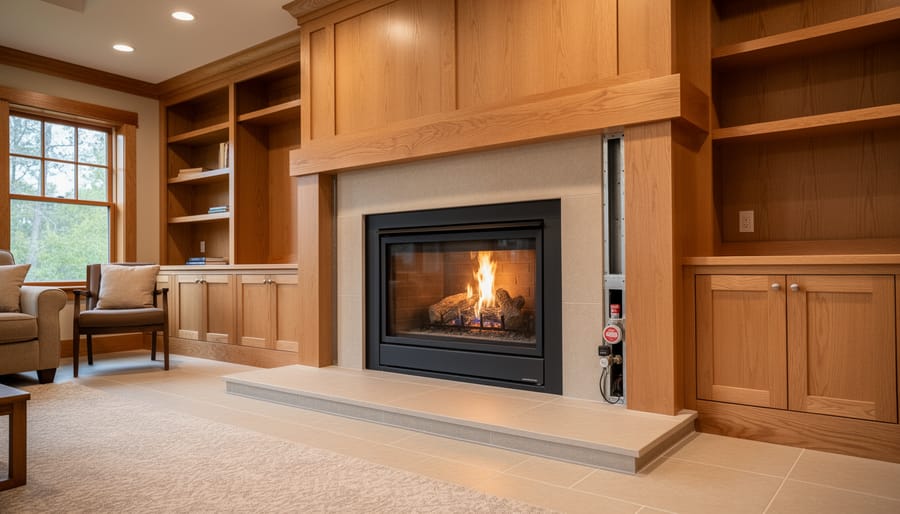
The hearth extension for a gas fireplace serves as a protective barrier between your flooring and the heat source, and getting the dimensions right is non-negotiable for both safety and code compliance. For most gas fireplaces, the 2024 IRC requires a hearth extension that projects at least 16 inches in front of the fireplace opening and extends at least 8 inches on each side. These measurements create a safety zone that prevents combustible flooring materials from exposure to radiant heat and potential sparks during maintenance.
Here’s where gas fireplaces offer a significant advantage over their wood-burning cousins: many factory-built gas units require much smaller hearth extensions because they produce less radiant heat and don’t create flying embers. A wood-burning fireplace typically demands a hearth that extends 16 to 20 inches in front and 8 to 12 inches on each side, while some modern gas fireplaces can reduce these requirements to as little as 6 inches in all directions, though you must verify this in your specific unit’s installation manual.
The hearth extension must be constructed from non-combustible materials like stone, tile, brick, or concrete, with a minimum thickness that varies by installation type. For raised hearths, ensure the extension is level with or slightly higher than your finished floor to prevent trip hazards while maintaining code compliance.
When planning your woodworking project around a fireplace, measure from the actual firebox opening, not from any decorative surround or facing you’re adding. This distinction matters because code officials measure from where combustion occurs, and miscalculating here could mean tearing out beautiful custom work.
Non-Combustible Materials for Hearth Construction
Building a fireplace hearth means selecting materials that won’t ignite when exposed to heat. The 2024 IRC specifies noncombustible hearth requirements that apply to both new installations and custom woodworking projects around existing fireplaces.
Natural stone remains the gold standard for hearth construction. Granite, slate, limestone, and soapstone all meet code requirements while offering distinct visual character. Each stone type brings different thermal properties, soapstone retains heat beautifully, while slate provides a sleeker, more contemporary look. I’ve watched woodworkers create stunning fireplace surrounds by pairing reclaimed timber mantels with locally sourced fieldstone hearths, combining modern safety standards with materials that tell a regional story.
Ceramic and porcelain tile offer versatility for custom designs. These materials handle direct heat exposure while giving you endless pattern and color options. Concrete provides another approved choice, particularly appealing for those seeking an industrial aesthetic or wanting to cast custom shapes.
The sustainability angle matters here. Salvaged stone from demolished buildings, factory seconds from tile manufacturers, or broken concrete pieces transformed into terrazzo-style hearths all meet code requirements while diverting materials from landfills. Just as sustainable reclaimed wood has revolutionized furniture making, reclaimed noncombustible materials let you build code-compliant hearths with character and environmental conscience.
Whatever material you choose, verify it’s rated as noncombustible and meets your local jurisdiction’s specific requirements before installation begins.
Clearance to Combustibles: The Critical Measurements
When you’re working with wood anywhere near a fireplace, understanding clearance to combustibles can make the difference between a stunning custom surround and a project that fails inspection. These requirements aren’t arbitrary rules designed to frustrate woodworkers. They’re based on decades of fire science showing exactly how heat radiates from an opening and when wood becomes dangerous.
The most critical zone is the first 12 inches measured horizontally from the fireplace opening. Within this 12-inch zone, building codes establish strict limits on how far any combustible material can project toward the firebox. The formula is straightforward: combustible material shall not project more than 1/8 inch for each inch of distance from the opening.
Here’s what that means in practice. If you’re installing a decorative wood trim piece 6 inches away from the fireplace opening, it can project no more than 3/4 inch from the wall (6 inches × 1/8 inch). At 12 inches from the opening, you’re allowed a maximum projection of 1.5 inches. This graduated approach recognizes that heat intensity decreases with distance, so you gain more design freedom as you move away from the firebox.
I once redesigned a mantel for a client who’d built a beautiful quarter-sawn oak surround that projected 2 inches at 8 inches from the opening. Mathematically, he was allowed only 1 inch of projection at that distance. Rather than scrapping the work, we relocated the trim pieces further out where the code permitted their depth, creating a stepped design that actually enhanced the visual interest while meeting requirements.
The rule applies to anything combustible: wood trim, built-in cabinetry, decorative corbels, even thick paint or wallpaper if it projects significantly. It’s measured from the nearest point of the fireplace opening, so corner installations require extra care when planning your layout.
Beyond the 12-inch zone, you gain more flexibility, but you still need to consider heat exposure. A mantel shelf directly above the opening, even at 15 or 18 inches away, receives concentrated rising heat. Most manufacturers and code officials recommend maintaining generous clearances for anything that projects substantially, regardless of the minimum requirements.
Remember that modern zero-clearance gas fireplaces often come with their own manufacturer specifications that may differ from these traditional masonry fireplace rules. Always verify which requirements apply to your specific installation.
Working with Zero-Clearance Gas Fireplaces
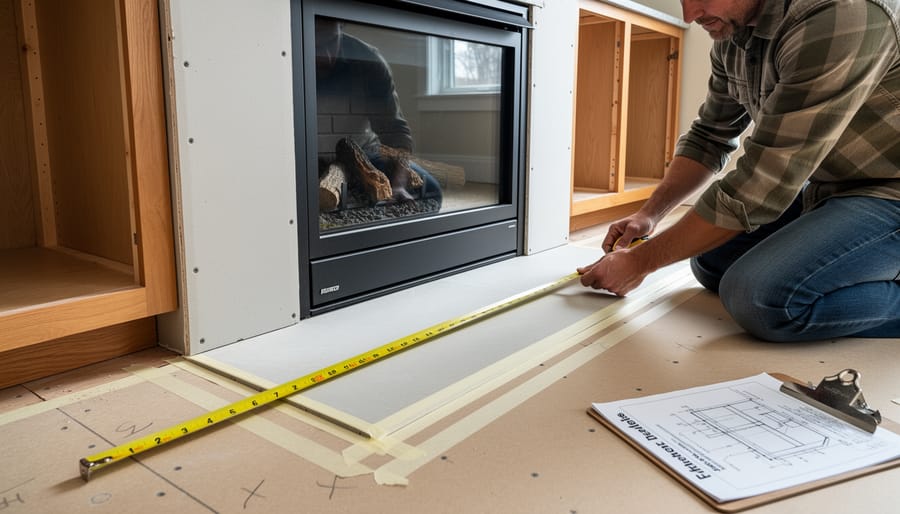
Zero-clearance gas fireplaces have revolutionized what’s possible for woodworkers designing custom built-ins and fireplace surrounds. Unlike traditional fireplaces that require extensive clearances between combustible materials and the firebox, these modern units feature advanced insulation and ventilation systems that allow them to be safely installed directly adjacent to wood framing, cabinetry, and other combustible materials. For anyone building floor-to-ceiling bookcases flanking a fireplace or incorporating a gas insert into a media console, this technology opens up design possibilities that simply weren’t feasible with conventional units.
The beauty of zero-clearance fireplaces lies in their flexibility for custom woodworking projects. You can build cabinets right up to the unit’s sides, create seamless integration with entertainment centers, or design mantels with minimal vertical clearance, all while maintaining safety and code compliance. This makes them ideal for modern open-concept homes where the fireplace serves as both a focal point and functional room divider, surrounded by built-in storage or display cases. The enclosed combustion chamber stays cool enough on the exterior that surrounding woodwork remains safe, even when the fireplace runs for extended periods.
Each manufacturer designs their zero-clearance units differently, with specific requirements for framing dimensions, ventilation pathways, and front clearances. Before finalizing your design, obtain the installation manual for the exact model you’re using. These specifications aren’t suggestions, they’re engineered safety requirements that maintain the UL listing and ensure your homeowner’s insurance remains valid. When you’re investing hours into crafting a custom surround from reclaimed barn wood or designing intricate trim details, taking time to understand these requirements upfront prevents costly redesigns and wasted materials later.
Designing Code-Compliant Custom Mantels and Surrounds
Calculating Safe Projection Distances
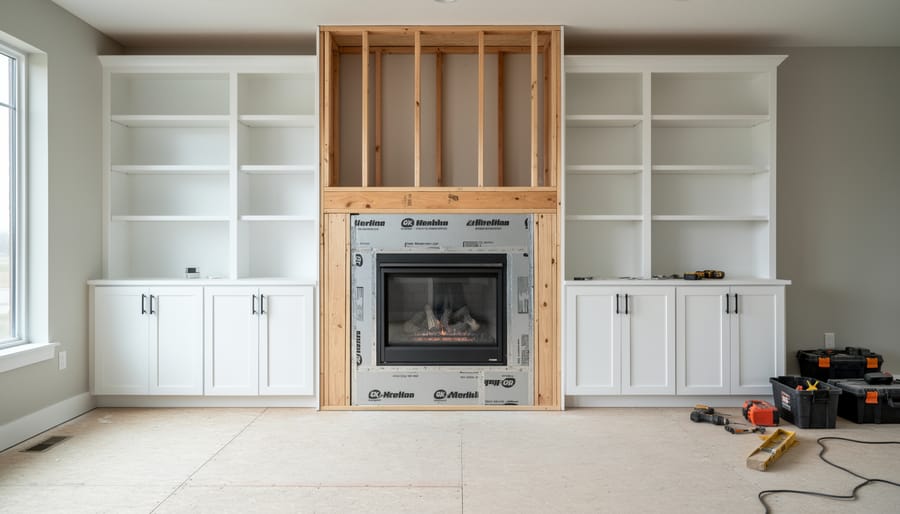
Here’s how to calculate safe mantel projections so your custom work meets code from the start.
The basic formula is straightforward: combustible material within 12 inches of the fireplace opening can project a maximum of 1/8 inch for every inch of distance from the opening. If you’re installing a mantel 6 inches above the firebox opening, the maximum projection allowed is 6 × 1/8 inch, which equals 3/4 inch. That’s barely a shelf.
For a more practical mantel depth, you need more distance. A common 8-inch-deep mantel requires at least 64 inches of clearance above the fireplace opening (8 inches × 8 = 64 inches). Most woodworkers building traditional mantels aim for 10 to 12 inches of depth, which means positioning the mantel shelf 80 to 96 inches above the opening.
Here’s a real-world example: suppose you want a substantial 12-inch mantel shelf on a fireplace with a 36-inch-tall opening. Measure from the top of the opening upward. At 96 inches above that point, you can safely project the full 12 inches. If your ceiling height won’t accommodate that distance, you have three options: reduce the projection, raise the mantel higher, or use a stepped design where only the topmost shelf projects fully.
For stepped mantels, each level follows the same formula independently. A decorative trim piece 48 inches above the opening can project 6 inches, while the main shelf at 80 inches projects the full 10 inches.
Always measure from the fireplace opening, not from the hearth floor. Write your calculations directly on your project plans, and double-check them before cutting expensive hardwood or reclaimed timber. One measurement error means redoing the entire piece.
Common Code Violations to Avoid in Your Fireplace Projects
Even experienced woodworkers sometimes overlook code requirements when they’re caught up in the excitement of creating a beautiful fireplace surround. Learning from these common mistakes can save you time, materials, and the frustration of having to redo finished work.
One of the most frequent violations involves mantel projection within that critical 12-inch zone above the fireplace opening. A woodworker from Ohio shared how his stunning quarter-sawn oak mantel had to be completely redesigned because it projected 3 inches at only 10 inches above the opening, exceeding the 1/8-inch-per-inch rule. Remember, at 10 inches distance, your maximum projection is just 1.25 inches. Many craftsmen design mantels assuming modern aesthetics override code, but inspectors won’t approve installations that violate clearance requirements.
Here are the violations that trip up most fireplace projects:
- Installing combustible trim or decorative elements directly against the fireplace opening without proper clearance
- Using reclaimed wood near the firebox without verifying distances meet the projection formula
- Extending hearths with combustible materials instead of required non-combustible stone, tile, or concrete
- Assuming zero-clearance units allow unlimited freedom without checking specific manufacturer specifications
- Building custom cabinetry too close to fireplace sides, ignoring lateral clearance requirements
Another common issue involves hearth extensions. DIYers frequently build beautiful hardwood platforms in front of gas fireplaces, not realizing codes require non-combustible materials for these surfaces. One maker thought decorative hardwood flooring extending to the fireplace would create a seamless look, but had to remove it entirely and install tile instead.
The reclaimed wood community faces unique challenges. While we celebrate sustainable material reuse and safe material handling, old barn beams and salvaged timber still must meet clearance requirements. A Vermont furniture maker learned this when her gorgeous reclaimed mantel beam, installed just 8 inches above the opening, failed inspection despite being over a century old and beautifully weathered.
The lesson here is simple: measure twice, check codes, and build once. These requirements exist to protect your family and your craftsmanship.
Understanding fireplace hearth codes transforms the way you approach projects around the hearth. These regulations aren’t red tape designed to frustrate your creativity, they’re the foundation for work that protects your home and family for decades to come. When you master the quality craftsmanship basics and combine them with code compliance, you’re building something that honors both tradition and responsibility.
Every properly planned clearance measurement, every thoughtfully selected non-combustible material, represents your commitment to excellence. The woodworker who calculates mantel projections correctly and sources reclaimed stone for a hearth extension isn’t just following rules. You’re creating heirloom pieces that future generations will gather around safely, reducing waste through precision planning, and avoiding the environmental cost of tearing out and rebuilding non-compliant work.
Before you cut your first board or measure for that custom surround, take time to verify your local jurisdiction’s specific requirements. The 2024 IRC Chapter 10 provides the framework, but your municipality may have amendments that affect your design. Contact your local building department, review their code variations, and secure permits where required. This investment of time up front ensures your beautiful work becomes a permanent, safe part of your home’s story.